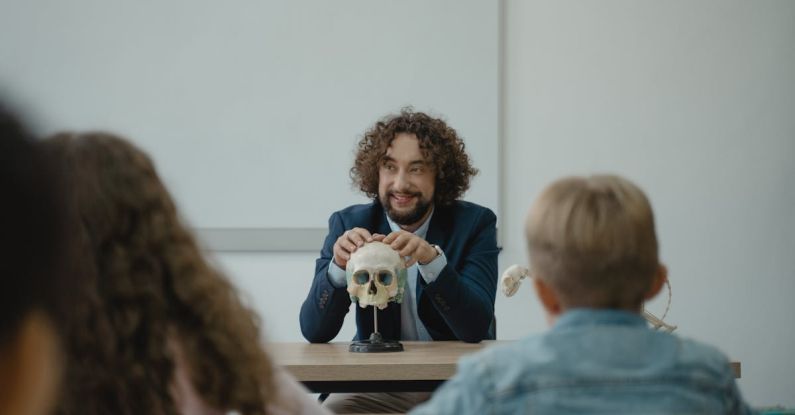
Incorporating play into learning has been a widely recognized and effective method for educating children across various age groups. While traditional methods of teaching certainly have their place, the benefits of learning through play cannot be overlooked. Play-based learning engages children on a deeper level, allowing them to explore, experiment, and discover in a way that is both enjoyable and educational. Let’s delve into the numerous advantages that this approach offers.
Enhanced Cognitive Development
One of the significant benefits of learning through play is the enhancement of cognitive development in children. When children engage in play-based activities, they are exercising their brains in a way that promotes critical thinking, problem-solving, and decision-making skills. Through play, children are encouraged to think creatively, make connections, and develop a deeper understanding of concepts. This active participation in the learning process helps to strengthen neural pathways and improve cognitive abilities.
Improved Social Skills
Play-based learning also plays a vital role in fostering social skills in children. By engaging in play with their peers, children learn important social cues, such as sharing, cooperating, and communicating effectively. Through play, children develop empathy, learn to take turns, and practice conflict resolution – all essential skills that contribute to healthy social interactions. Moreover, playing in a group setting helps children build relationships, develop friendships, and establish a sense of community.
Stimulated Imagination and Creativity
Another key benefit of learning through play is the stimulation of imagination and creativity in children. Play allows children to enter a world of make-believe, where they can explore new ideas, roles, and scenarios. Through imaginative play, children can express themselves freely, experiment with different perspectives, and unleash their creativity. This creative outlet not only enhances cognitive development but also fosters a sense of wonder and curiosity in children, encouraging them to think outside the box and explore new possibilities.
Hands-On Learning Experience
Play-based learning provides children with a hands-on learning experience that is both engaging and memorable. Through play, children have the opportunity to interact with materials, manipulate objects, and engage with their environment in a meaningful way. This kinesthetic approach to learning helps children understand abstract concepts by making them tangible and relatable. Whether it’s building with blocks, conducting experiments, or engaging in pretend play, hands-on learning through play allows children to experience learning in a way that is immersive and impactful.
Promotes Physical Development
In addition to cognitive and social skills, play-based learning also promotes physical development in children. Engaging in active play, such as running, jumping, climbing, and balancing, helps children develop gross motor skills, coordination, and strength. Outdoor play, in particular, offers children the opportunity to explore their physical abilities, interact with nature, and stay active. By incorporating physical play into their learning experiences, children develop a strong foundation for a healthy lifestyle and overall well-being.
Encourages a Love for Learning
Perhaps one of the most significant benefits of learning through play is that it instills a love for learning in children. By making learning fun, engaging, and interactive, play-based education fosters a positive attitude towards learning from a young age. Children develop a curiosity and enthusiasm for exploring new ideas, discovering the world around them, and seeking knowledge independently. This intrinsic motivation to learn sets children on a lifelong path of continuous growth, discovery, and personal development.
In conclusion,
Learning through play offers a multitude of benefits that contribute to the holistic development of children. By incorporating play into education, we not only enhance cognitive abilities, social skills, and creativity but also promote physical development and a love for learning. Play-based learning engages children on a deeper level, allowing them to learn through experience, exploration, and discovery. As we continue to recognize the value of play in education, we empower children to thrive, succeed, and embrace learning as a lifelong journey filled with excitement and possibility.